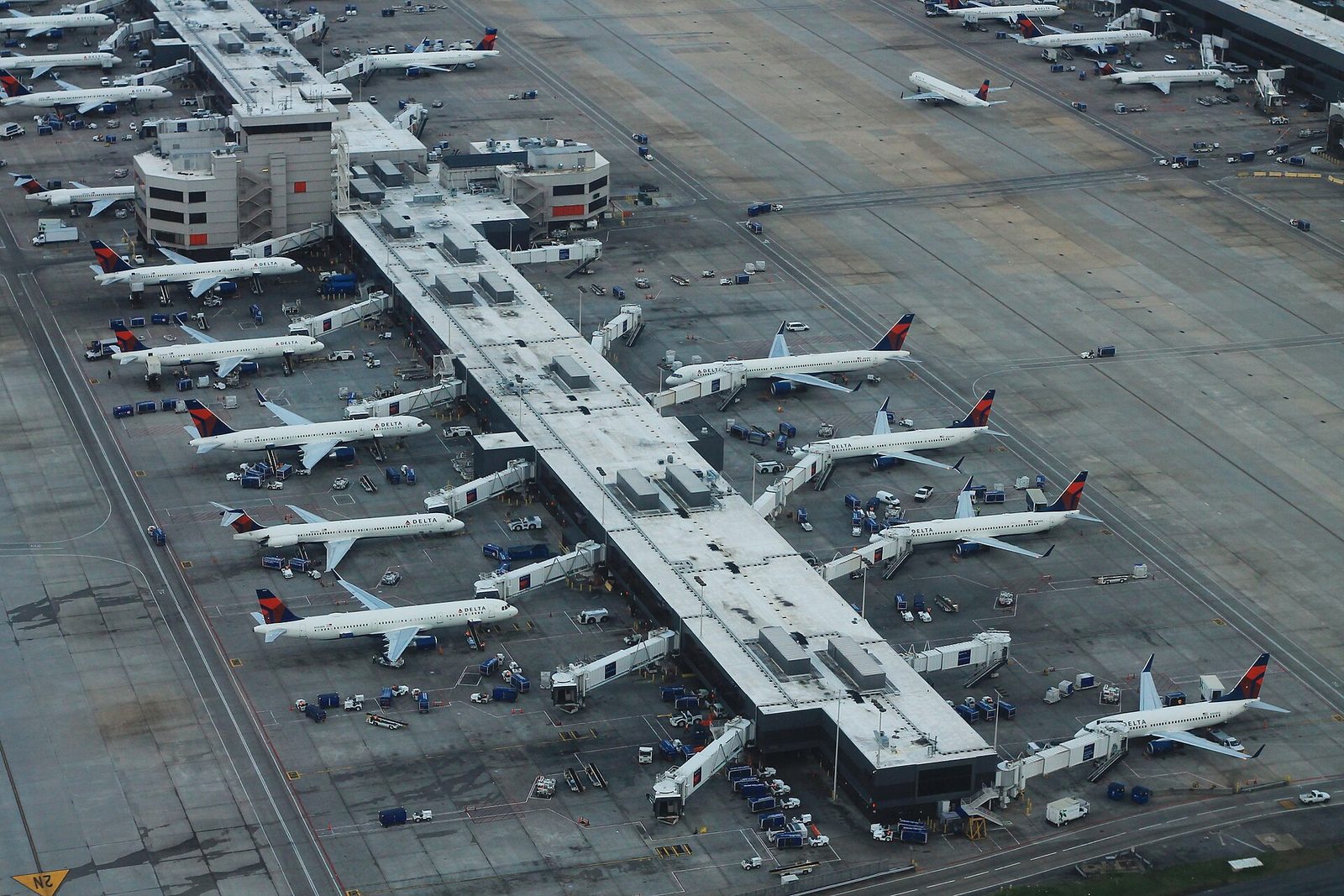
“Late aircraft” is not a reason.
When a flight is delayed, the airline usually says the plane arrived late — which only moves the question back one flight. That one answer hides the real one: the same aircraft flies several flights a day, and a delay that starts on the first flight can follow it to the last.
Airport Sky World walks the aircraft’s whole day — every flight it flew before yours — splits each flight’s delay into the part it inherited and the part it created, finds the first flight that actually started the delay, and names the cause of that first flight.
No other site traces your delay back to where it actually started.
Trace a flight
Recorded traces are ready for flights from September 2026 (the latest month in the official BTS record). Other dates return the flight number’s recorded pattern for that month.
Flying today? Track the aircraft live
The trace above is the recorded record. For a flight in the air right now, the Live Delay Tracker follows the aircraft itself — flight number or tail number — with its live position and the FAA delay picture at both ends of its leg.
Start from your airport
Tap an airport for its live page: today’s FAA programs there, what they mean for flights at that airport, and how its delays usually start.
Tile colors are the live sky at each airport right now — weather by Open-Meteo, refreshed about every 15 minutes. A plain grey tile means the weather did not load; it is never a made-up condition.
Airport News — latest
Trace result
See a trace now
Live per-flight data needs a licensed feed (see “What’s live and what isn’t” below), so the full tracer is demonstrated with worked example traces — real delay patterns, clearly labelled as examples.
The trace library — real recorded traces and outage post-mortems →
Live FAA board — today’s national airspace programs
This part is fully live. The FAA publishes every active ground stop, ground delay program, and airport closure in the United States, free. These programs are where many delays are born, so this board is the tracer’s live cause layer — with each program explained in everyday words.
Loading today’s FAA programs…
This board refreshes itself automatically — updates in 1:00.
Source: FAA NAS Status feed (nasstatus.faa.gov), refreshed by the FAA roughly every minute. Times shown as published by the FAA (UTC).
How origin tracing works
- Follow the plane, not the flight number. One aircraft usually flies 3–6 flights a day. Your flight is one link in that chain.
- Split every link. For each flight, we separate the delay it inherited (the plane arrived late and the schedule couldn’t absorb it) from the delay it created (it lost new time of its own).
- Find the first link that created delay. That is the origin. Everything after it is echo.
- Name the origin’s cause from public evidence: FAA programs at that airport at that time, weather, or the official cause categories the airlines report to the Bureau of Transportation Statistics (airline-caused, weather, air traffic system, security, late aircraft).
- Say what it means for you. Whether an airline owes meal or hotel help under its Department of Transportation commitments depends on whether the delay was within its control. The origin cause is the best public evidence of that — so we label the conclusion “likely,” because only the airline’s internal classification is authoritative, and it is published nowhere.
The scale of what this explains: in 2025, about 40% of all US flight-delay minutes were “late aircraft” — inherited delay, the largest single category the Bureau of Transportation Statistics reports. Every one of those passengers was told the echo, not the cause.
The words, decoded
- Ground stop
- The FAA halts departures bound for one airport. Planes sit at the airports they are leaving from until the stop lifts.
- Ground delay program (GDP)
- The FAA rations arrivals at a busy or weather-hit airport by assigning each flight a set departure time, so the delay happens on the ground, not in holding patterns.
- EDCT
- “Expect departure clearance time” — the assigned takeoff time a ground delay program gives your flight. Your wheels-up time, set by the FAA.
- NAS
- The National Airspace System — the whole US air-traffic system. A “NAS delay” is charged to the system itself (traffic volume, FAA equipment, closed runways), not to weather or the airline.
- BTS
- The Bureau of Transportation Statistics. Airlines file every flight’s times and delay causes with it; that official record is what our traces are built from.
- Tail number
- An aircraft’s registration (like N123UA). It identifies the physical plane, which is how one aircraft’s whole day can be followed.
- Inherited vs created
- Inherited delay arrived with the aircraft from its previous flight. Created delay is new time a flight lost on its own. The origin of a delay is the first flight that created it.
What’s live and what isn’t
- Live now: the FAA board above — real programs, straight from the FAA.
- Working now: the origin-tracing engine itself — the math that splits inherited from created delay and finds the origin leg. It runs on the example traces today.
- Working now, on recorded data: the lookup above traces real flights from the Bureau of Transportation Statistics (BTS) on-time records — the official record each airline files with the Department of Transportation, including the aircraft’s tail number and BTS’s own per-flight delay causes. Coverage right now: September 2026, every flight the reporting carriers filed. Pick a date in that month and the trace is the flight’s real day. For other dates you get the flight number’s recorded pattern for the month, labelled as a pattern — never dressed up as that day’s flight.
- Not connected yet: live per-flight times and aircraft rotations for today’s flights. That data is sold under licence (FlightAware AeroAPI) and is not free for a public website, so today’s flights get the live FAA board check instead. We never invent a flight’s status.
- History note: BTS publishes its records about 45 days after the fact — the recorded traces are history, not live data, and every result says so.